AI Voice Cloning Scams: The 30-Second Check That Protects Your Family
AI voice scams are now realistic enough to fool careful people. Learn the simple callback rule, family safe phrase, and red flags that stop fake emergency calls before money moves.

In This Article
Why This Scam Is Suddenly Everywhere
AI voice cloning used to sound robotic. Now a short public clip from a social video, voicemail, podcast, school event, or work call can be enough to imitate how someone speaks. That is why this scam feels personal: it does not start with a suspicious link. It starts with a voice that sounds like someone you love.
The larger fraud trend is also moving fast. The FBI's 2025 IC3 report recorded more than one million cybercrime complaints and $20.877 billion in reported losses. The FBI also called out cryptocurrency and artificial intelligence complaints as especially damaging. Not every dollar came from voice cloning, but the direction is clear: scammers are using AI to make old tricks feel urgent, familiar, and believable.
The FTC has warned that voice cloning can help criminals impersonate family members, friends, and business leaders. The FCC also made AI-generated voices in robocalls illegal under robocall rules in 2024. Laws help, but the fastest protection is still a habit you can use during the call itself: pause, verify, call back, then act.
How an AI Voice Scam Usually Works
Most voice-cloning scams follow the same emotional script. First, the scammer creates urgency: an accident, arrest, hospital bill, lost phone, frozen bank account, or fake kidnapping. Second, they create isolation: do not tell anyone, stay on the line, this has to happen now. Third, they ask for a payment method that is hard to reverse, such as gift cards, wire transfers, payment apps, crypto, or a one-time login code.
The voice is only one layer of the trick. The real weapon is pressure. If you feel rushed, embarrassed, scared, or told to keep a secret, treat that feeling as evidence. A real emergency can survive a callback. A scam usually cannot.
The 30-Second Verification Check
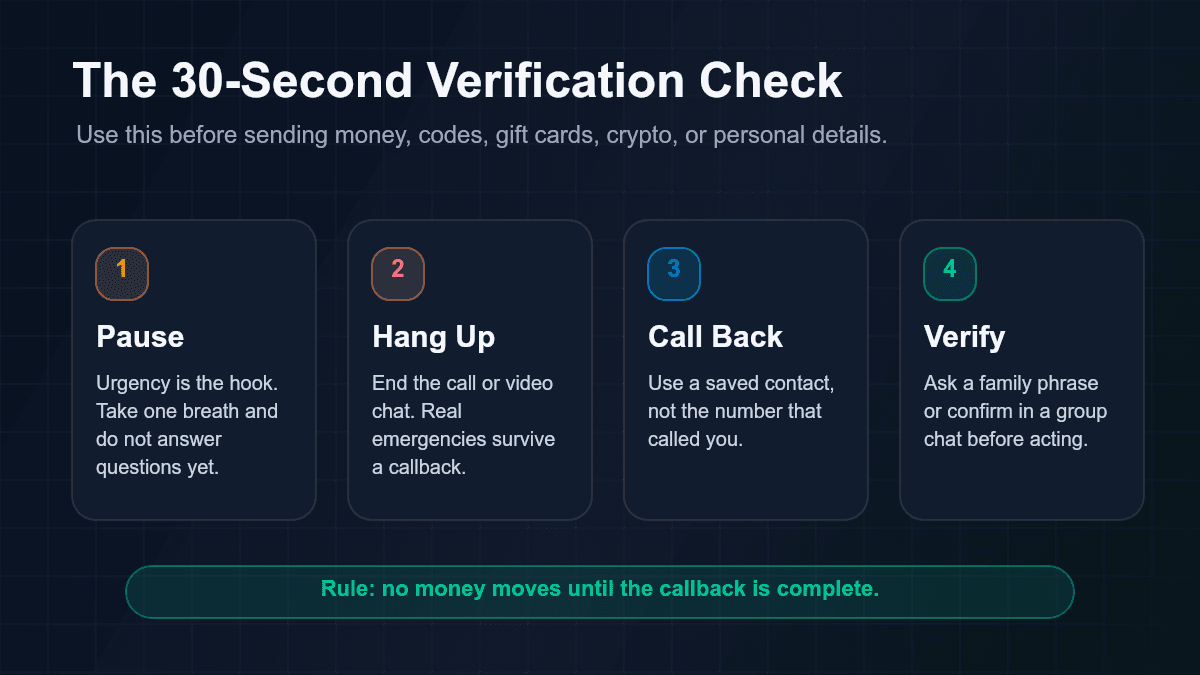
Use this rule before sending money, codes, gift cards, crypto, private photos, or personal details: no money moves until the callback is complete.
Step one: pause. Do not answer questions immediately. Take one breath and remind yourself that urgency is part of the scam.
Step two: hang up. This feels rude, but it is the point. If the situation is real, you can still help after verifying.
Step three: call back using a saved contact. Do not call the number that called you. Do not use a number they texted. Use the contact already saved in your phone, a number from a trusted family group chat, or an official website you type yourself.
Step four: verify with one private detail. Ask a question only the real person would know, use a family safe phrase, or confirm through another family member. Keep it simple. The goal is not to win an argument with the scammer. The goal is to break the pressure loop.
Set Up a Family Safe Phrase Before You Need It
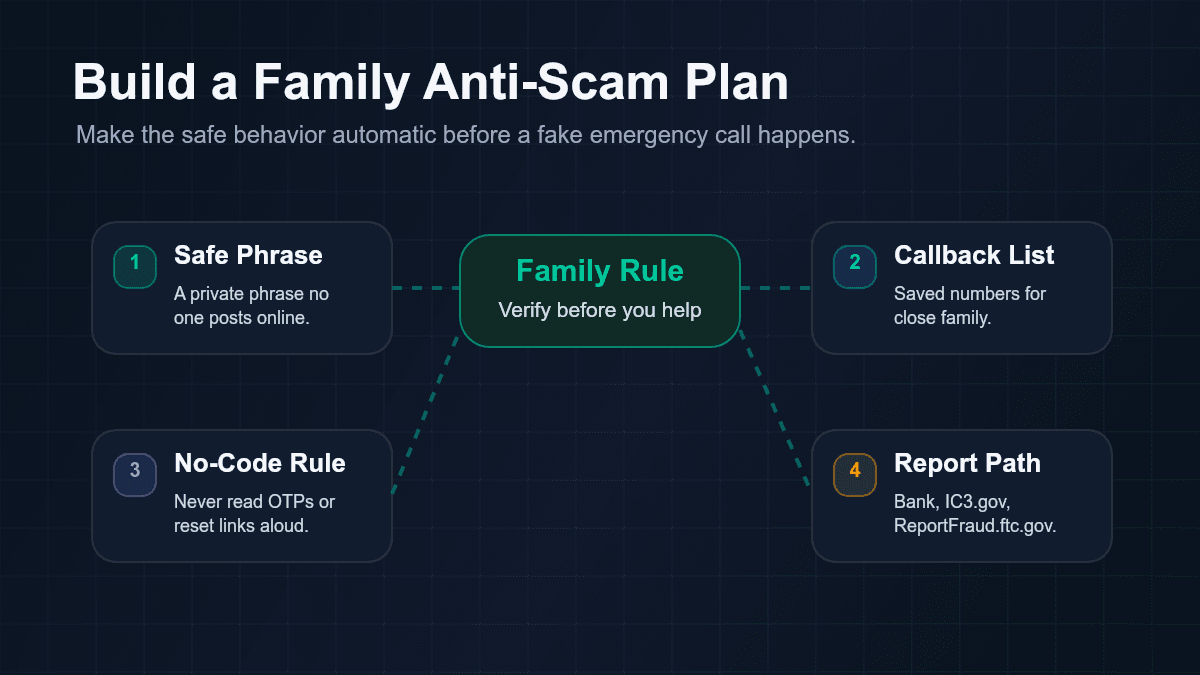
The best time to build a safety rule is before anyone is scared. Pick a short phrase your family can remember but would never post online. It should not be a birthday, pet name, school name, or hometown. Something like "blue suitcase" or "paper moon" is better than a personal fact.
Then create a callback list. Save the real numbers for parents, grandparents, children, siblings, close friends, and anyone who might ask for emergency help. Put the rule in plain language: if someone calls asking for money or secrecy, we hang up and call back from the saved number.
Add one more rule: nobody reads one-time passwords, reset links, or banking codes out loud. Banks, tech support, police, and family members do not need your login code. If a caller asks for a code, that is enough to stop the conversation.
Red Flags That Matter More Than the Voice
Do not focus only on whether the voice sounds real. AI voices are getting better, and phone audio is already compressed enough to hide small flaws. Instead, watch for the behavior around the voice.
The biggest red flags are secrecy, speed, unusual payment methods, and a story that prevents normal verification. Be careful when someone says their phone is broken but they can still call you, they are with a lawyer or officer who will explain payment, they need gift cards or crypto, they cannot video call, or you must not contact anyone else.
Also watch for account takeover tricks. A scammer may sound like a friend and ask you to read a text message code so they can "get back into their account." That code may actually reset your account, not theirs.
What To Do If You Already Sent Money
Move quickly. Call your bank, payment app, credit card company, or crypto exchange immediately and say you may be the victim of fraud. Ask whether the transfer can be frozen, reversed, recalled, or flagged. Speed matters more than perfect paperwork.
Next, preserve evidence. Save phone numbers, screenshots, transaction IDs, wallet addresses, emails, texts, voicemail recordings, and the exact time of contact. Do not delete the conversation just because it feels embarrassing. Evidence helps banks and investigators.
Report it at IC3.gov for cyber-enabled crime and ReportFraud.ftc.gov for consumer fraud. If someone claimed a kidnapping, arrest, or immediate physical danger, call local law enforcement too. The point is not blame. The point is stopping the loss and making the pattern easier to investigate.
A Simple Rule for Everyday Life
Teach everyone in your family this sentence: "I will help you, but I have to call you back first." It is calm, kind, and firm. You are not accusing anyone. You are just verifying.
That sentence works for parents, grandparents, teenagers, coworkers, and friends. It works when the voice sounds real. It works when the message says not to tell anyone. It works when the caller says there are only five minutes left.
AI scams will keep changing, but the human safety habit stays the same: slow down the moment, move to a trusted channel, and verify before money or access leaves your hands.